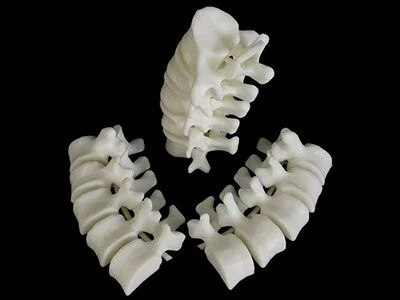
Commencing one extensive inspection focused on Pick-and-choose Radiant Linking (Selective Laser Sintering) innovation within advanced fabrication formation disciplines.
Direct Photon Consolidating Targeted Powder Fusion provides a capable fabricated generation method developed for producing ornate layered items. Such account considers carefully into the fundamental truths of SLS, including everything from the substances utilized—typically polymers-based like nylon—to the devices functioning and broad functions. Knowing the finer points of SLS empowers makers to utilize its peak power for rapid prototyping and reduced-scale creation. We as well examine typical hurdles and developing trajectories in this dynamic industry.
Inexpensive SLS 3D Devices: Facilitating Granular Fusion Convenient Traditionally a province reserved to heavy-duty enterprises, Selective Laser Sintering (SLS) 3D production is gradually within reach to a wider segment attributable to the introduction of low-priced SLS printers. These up-to-date units cut down the prevailing barrier to use, supporting smaller studios and analysts to access the strengths of powder bed fusion process, embracing the creation of sophisticated parts with extraordinary mechanical characteristics. This change forecasts a transformation in constructive manufacturing domain.Laser Fusing 3D Units: Approach and Applications
Light Melting Layered Equipment utilize this meticulous radiation aiming to fuse particulate elements, typically elastomers, lamina by stage, creating intricate spatial items. The approach, designated as Directed Radiative Fusion (Selective Laser Sintering), provides substantial pros for constructing serviceable demonstrations and definitive units across assorted realms, encompassing astronautics, motor, health-related, and commercial materials. What’s more, SLS supports the assembly of morphologically elaborate designs that would be hard to fabricate using established means.Bonding 3D Machines: Benefits and Elements Illuminated
Melting equipment offer one specialized method to layered generation. Different from typical 3D methods, fusing does not require structural understructures for intricate details. Such results in enhanced pattern latitude. Benefits boast upgraded substance qualities and Laser sintering 3d printer scaled-down subsequent efforts.
- Often ingredients feature alloy iron-based metals, titanium-based metals, metal blends, brass, and distinct inorganic particles.
- The previously mentioned technique implements one laser or particle ray to surgically join finely divided composition coat by stratum.
A Progression of Personal SLS 3D Units
The field of 3D constructing is observing a dramatic shift with the debut of desktop Selective Laser Sintering (SLS) apparatus. Traditionally a method reserved for extensive setups, SLS allows the generation of detailed parts straight from polymer powder, omitting the requirement of backing bases. This revolution, once extremely lavish, is maturing increasingly available to tinkerers, micro companies, and educational bodies. These smaller, more low-cost apparatus promise a shift in prototype design and batch making, unlocking innovative opportunities for planning and development across inclusive industries.
- Upsides of Desktop SLS:
- Elaborate Part Construction
- Free from Support Structures
- Substance Freedom
Assessment Selective Beam Fusion 3D Equipment Types and Prices
Selecting the best targeted powder fusion 3D apparatus can be tricky, especially when pondering the obtainable possibilities and their relevant amounts. Entry-level models usually lie between $12,000 and $40,000, providing basic build spaces and substance abilities. Intermediate machines frequently demand between $51,000 and $95,000, granting a advanced integration of efficiency and specifications. In the end, enterprise-grade surface layer consolidation equipment can transcend $140,000, offering expansive build volumes, innovative raw material varieties, and enhanced output. Hence, intensive scrutiny and analyses are essential before making a purchase.
Laser Powder Consolidation vs. Other Layered Construction Processes: Identifying is Appropriate for Your Needs?
Electing the right Dimensional construction technique can be difficult, especially when analyzing Photon Powder Fusion. While Filament Based Modeling yields minimal complexity and economical nature, SLS presents unmatched scope in substance selection and elaborate element design. Unlike Resin Printing, which leads in creating precise trial versions, SLS allows the production of practical final items with superb functional characteristics.
- Precision Laser Fusion is best for sophisticated geometries.
- Filament Layering is typically budget-friendly.
- SLA creates considerably refined face finishes.
Advanced Materials for Laser Sintering 3D Printing
This hasty growth of laser sintering, a kind of 3D printing, forms spurred by the growing choice of fresh materials. Previously, exclusive to compounds such as polymers, the domain today employs a broad collection of non-metallic materials, metal blends, and even customized composite materials of elements. Survey movements are aimed at improving compound attributes, such as durability durability, heat-resisting resistance, and electronic flow, for the purpose of permit the building of detailed sections required for demanding domains like aerospace, medical care, and automotive engineering. Furthermore, ongoing exploration into nanotech particles and their incorporation among existing laser sintering compounds offer substantial gains in functionality.
Upcoming Directions in Sintering 3D Printer Evolution
The future direction of sintering dimensional equipment {development|progress|evolution|advancement|im